

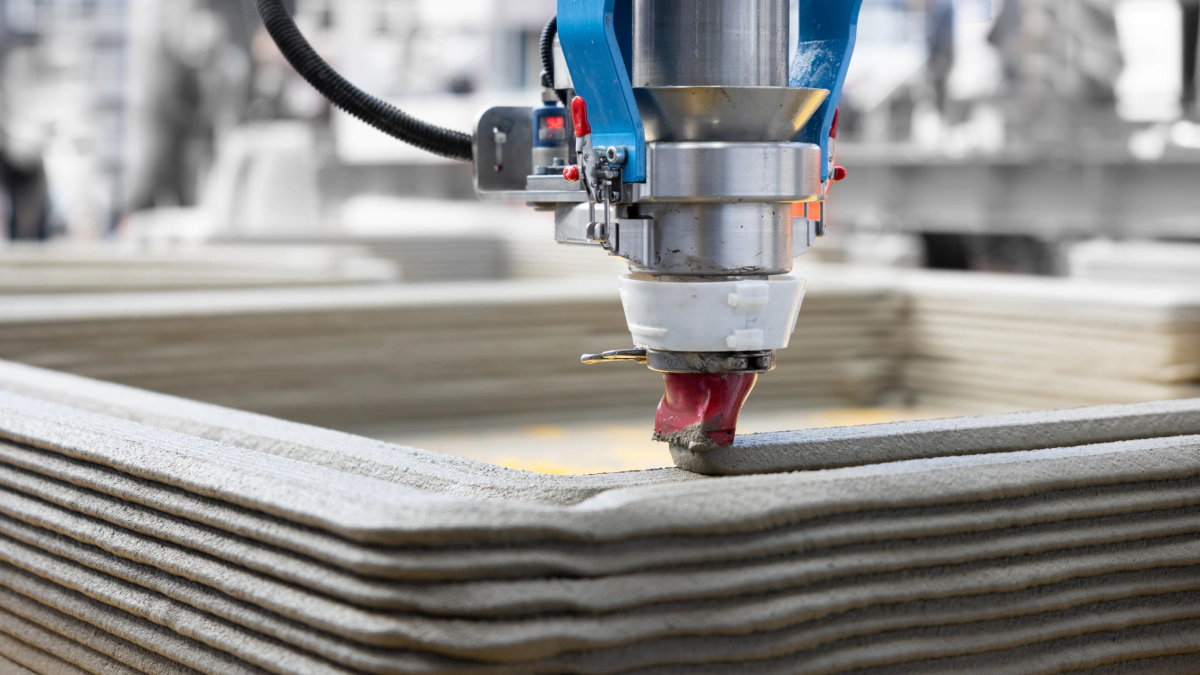
What is 3D Concrete Printing?
3D concrete printing is an advanced method of construction where layers of concrete are printed, or extruded, using a specialized 3D printer to create complex structures. This technology uses digital blueprints to “print” a building layer by layer, enabling the construction of highly customized and intricate designs that traditional methods can’t achieve as easily.
Additive manufacturing in construction is a key component of 3D concrete printing, where materials are deposited layer by layer to form structures, rather than subtracting from a large block of material as in traditional construction techniques. This method has gained immense popularity due to its ability to reduce material waste, speed up the construction process, and open the door to new possibilities in design and sustainability.
How Does 3D Concrete Printing Work?
The process begins with creating a digital 3D model of the building or structure, often designed using 3D modeling software. This model is then sent to a 3D concrete printer, which extrudes a specially designed concrete mix through a nozzle. The printer lays down successive layers of material that bond together to form the structure. As each layer hardens, the printer moves on to the next layer, continuing the process until the entire building or structure is complete.
One of the greatest advantages of 3D printing in construction is its ability to work with complex geometries. Unlike traditional methods, 3D concrete printing technology can create intricate designs with precise detailing and shapes that would be impossible to achieve using conventional methods.
Benefits of 3D Printed Concrete in Construction
1. Reduced Construction Time
One of the most significant advantages of 3D printed buildings is the speed at which they can be constructed. Traditional construction methods can take months or even years to complete a project, especially large and complex structures. With 3D printing, construction can be completed in a fraction of the time. In some cases, the 3D printing process can construct the entire shell of a building in just a few days, significantly accelerating project timelines.
2. Cost Efficiency
The reduced construction time directly leads to lower labor costs, as fewer workers are required on-site for extended periods. Additionally, 3D concrete printing uses less material than traditional methods, further driving down costs. The technology also minimizes waste, which reduces the overall cost of construction materials.
3. Design Flexibility
Unlike traditional construction methods, 3D printing in the construction industry offers a vast range of design possibilities. Architects and designers are no longer limited to the shapes and structures that can be built with conventional materials. The precision of 3D concrete printing enables the creation of highly customized designs, from complex geometric shapes to intricate patterns, all while maintaining structural integrity and safety.
4. Sustainability and Reduced Waste
One of the environmental benefits of 3D printed concrete is the reduction in waste. Since the process is additive, only the required amount of material is used, leading to minimal waste. Additionally, the technology often uses recycled materials in the concrete mix, contributing to more sustainable construction practices. This environmentally friendly approach is particularly important as the construction industry faces increasing pressure to reduce its carbon footprint.
The Impact of 3D Concrete Printing on the Construction Industry
The rise of 3D concrete printing has the potential to disrupt the construction industry in profound ways. From lowering construction costs to offering more sustainable building solutions, the possibilities are vast. Furthermore, 3D printed concrete offers the ability to build in remote or difficult-to-access areas, such as disaster zones, where traditional building methods might not be feasible. The ability to rapidly construct buildings in these areas could significantly improve recovery efforts and provide shelter for those in need.
While still in its early stages, the application of 3D concrete printing in construction is expected to grow. As the technology matures, it will likely become a mainstream method for both residential and commercial projects. From small homes to large-scale infrastructure, 3D printing could transform how we think about building in the modern world.
Ready to Transform Your Project with 3D Concrete Printing?
At Radcliff Industries Concrete and Construction, we’re at the forefront of utilizing 3D concrete printing technology to revolutionize the construction process. Whether you’re looking to build a custom-designed home, a commercial space, or even infrastructure projects, our expertise in 3D concrete printing allows us to deliver high-quality, cost-effective, and sustainable solutions.
Are you ready to explore the benefits of 3D printed concrete for your next project? Get in touch with us today to learn more about how we can help you bring your vision to life using the latest in construction technology. Call Radcliff Industries Concrete and Construction at (816) 935-8409 and start your project today.
Conclusion:
3D concrete printing is poised to change the way we approach construction. With its ability to reduce costs, accelerate timelines, and provide design flexibility, this technology is ushering in a new era for the construction industry. As a forward-thinking construction company in Bonner Springs, KS, Radcliff Industries Concrete and Construction is ready to help you harness the full potential of this innovative technology for your next project. Don’t miss out on the future of construction – get in touch with us today and see how 3D concrete printing can bring your vision to life!
